
Why Some Nails Never Turn Out Right (And It’s Not Your Technique)

You’ve had this client.
You do everything right.
Your prep is clean
Your structure is solid
Your technique is dialed in
But the result?
It’s… fine.
Not your best work.
Not something you want to photograph.
Not something that gets compliments.
And a few weeks later—they don’t come back.
It’s frustrating—because you know your skill is better than that.
Most nail techs assume:
Maybe I didn’t build the apex right
Maybe I should’ve shaped it differently
Maybe it’s just one of those clients
But there’s a deeper issue that rarely gets talked about:
Sometimes, the nail itself is working against you.
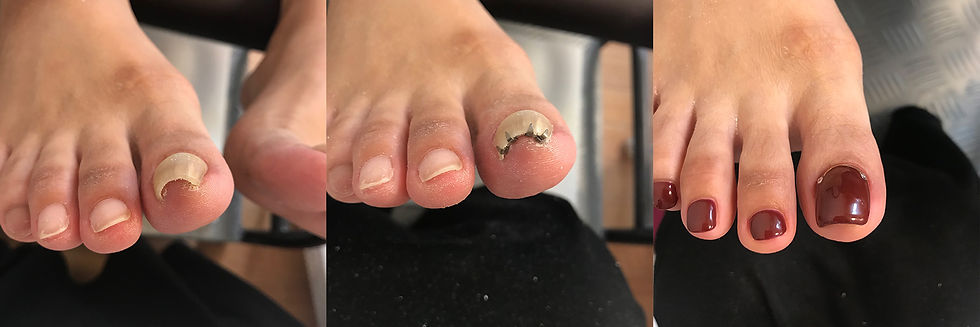
The hidden problem: nail structure

Not every nail gives you a clean canvas.
Some nails:
Curve too tightly
Pull inward at the sides
Have uneven sidewalls
This is often called an involuted nail—but regardless of the label, what matters is this:
When you’re dealing with involuted nails gel problems, the issue isn’t just your application—it’s the structure underneath.
👉 The foundation isn’t balanced.
And when the foundation isn’t balanced, everything you build on top becomes harder.
What this actually looks like in your work
1. The shape never looks quite right
You file, refine, adjust…
But:
Sidewalls don’t sit straight
The free edge looks slightly off
The apex doesn’t feel centered
You’re constantly compensating.
2. Retention is inconsistent
Even when your prep is solid:
Lifting happens at the sides
Cracks form at stress points
Some sets last, some don’t
It feels unpredictable—but it’s not random.
The structure underneath is uneven, so the product can’t behave consistently.
3. You end up doing quiet fixes and redos
These aren’t always dramatic failures.
It’s:
Small fixes
Early maintenance
Extra time spent adjusting
👉 Time you don’t get paid for.
4. Clients don’t always say anything—they just don’t return
This is the part most people miss.
Clients might feel:
Slight discomfort over time
That the nails didn’t last as expected
That the shape wasn’t what they wanted
But instead of complaining…
👉 They just don’t rebook.
5. Your work doesn’t get shared
Think about the sets you:
Photograph
Post
Feel proud of
Now think about the ones you don’t.
When the shape isn’t clean or the result feels “off”:
You don’t post it
It doesn’t get compliments
It doesn’t bring in new clients
And that’s where growth slows down.
The truth most nail techs eventually realize
Your results are limited by the nail you start with.
No matter how strong your technique is, you’re still:
Adjusting
Compensating
Working around the structure
Instead of building on something stable and predictable.
What Causes Involuted Nails Gel Problems? A different way to think about it
What if the goal wasn’t just to perfect your application…
But to understand the surface you’re working on first?
When you start recognizing:
Which nails are balanced
Which nails are working against you
Everything changes:
Your expectations
Your approach
Your results
Why this matters (beyond just the set)
Better structure →
More consistent results
Fewer fixes and redos
Happier clients
Happier clients →
More rebookings
More referrals
More growth
Final thought
Nail techs don’t just apply product.
They create shape, structure, and confidence.
But when the foundation is off, even great technique has limits.
Understanding that isn’t a weakness—it’s what separates good work from consistently great work.
If you’re interested in going deeper into nail structure and how it affects your work, we’ll be sharing more educational content on this soon.


Comments