
Why Mechanical Predictability Matters in Nail Bracing Systems

As NailLift Canada continued engaging with podiatrists, chiropodists, and foot care professionals throughout 2024 and 2025, one concept surfaced repeatedly:
Mechanical predictability determines clinical credibility.
In conservative nail correction, outcomes depend not only on intent — but on controlled, reproducible biomechanics.
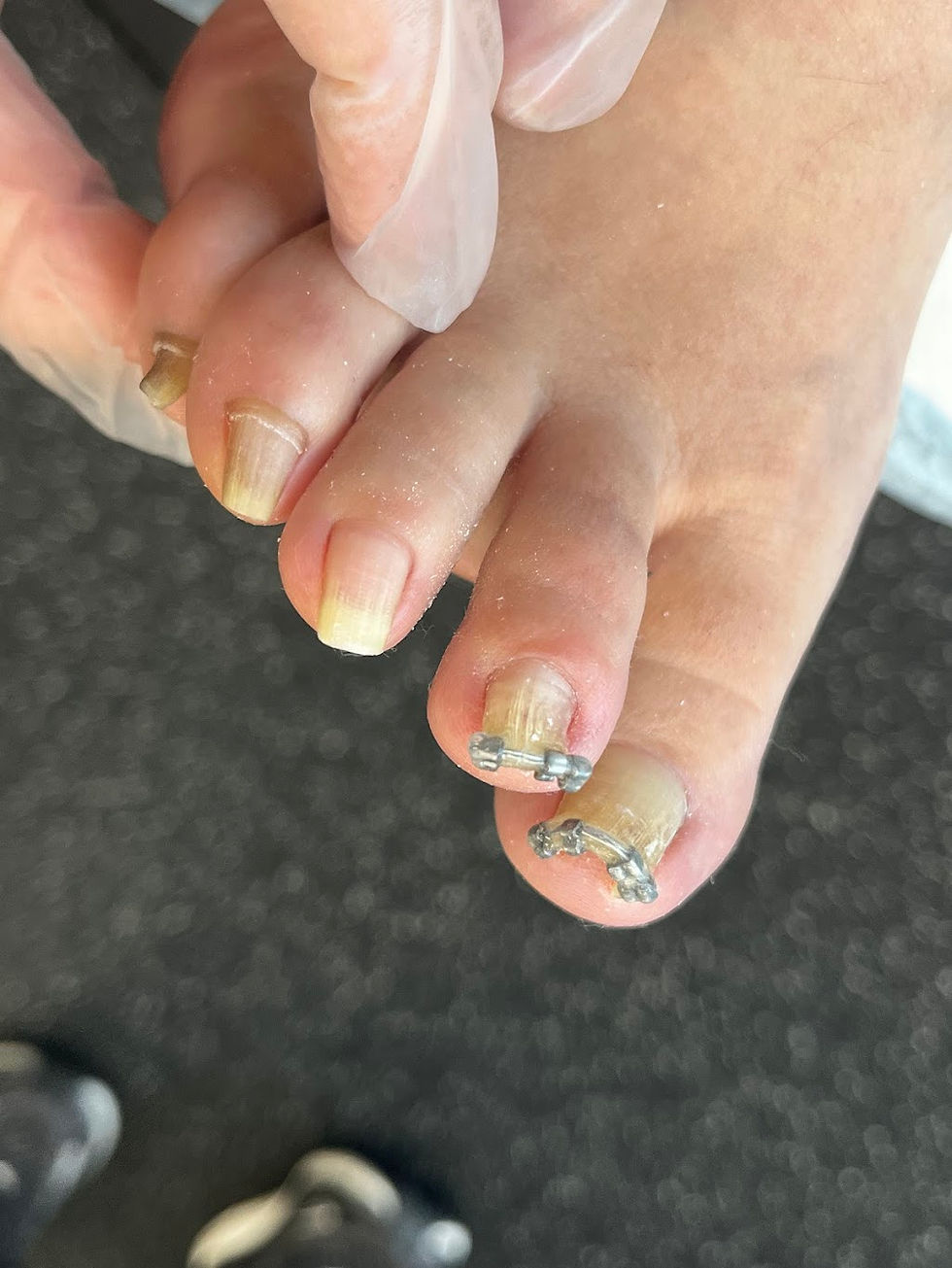
What Makes a Nail Bracing System Mechanically Reliable?
A structured nail bracing system must achieve three things:
Controlled lateral lift
Balanced tension distribution
Stable retention over time
Without mechanical consistency, correction becomes unpredictable. Overcorrection can cause discomfort. Under-correction can fail to relieve pressure.
Through clinical discussions at the 2024 Canadian Federation of Podiatric Medicine Conference and subsequent 2025 events, it became clear that practitioners value systems grounded in mechanical logic — not marketing claims.
The Principle of Controlled Lift
In involuted nails, lateral edge pressure drives inflammation and pain.
Effective bracing works by:
Applying calibrated outward tension
Gradually reducing curvature
Relieving pressure on the lateral nail fold
Allowing soft tissue to settle
The key word is gradual.
Aggressive force application may temporarily alter nail shape but risks discomfort, detachment, or recurrence.
Predictable systems prioritize incremental correction that aligns with natural nail growth cycles.
Tension Principles and Clinical Outcomes
One of the most valuable pieces of feedback we received early in our conference engagements was this:
If practitioners cannot reliably control tension, they will not trust the system.
That insight shaped how NailLift Canada now approaches application education.
Proper tension selection must consider:
Nail thickness
Degree of involution
Patient sensitivity
Growth rate
History of recurrence
Mechanical predictability is not about maximum force — it is about appropriate force.
When tension is matched correctly to pathology, patients often experience relief more quickly and with fewer complications.
Reducing Recurrence Through Biomechanical Consistency
Recurrence is one of the greatest frustrations in ingrown toenail management.
While no intervention eliminates recurrence risk entirely, structured mechanical correction can:
Modify the nail growth trajectory
Reduce lateral embedding
Support long-term curvature change
Complement ongoing preventative care
Conference discussions reinforced that recurrence reduction depends less on dramatic correction and more on consistent, properly maintained application protocols.
This realization influenced how we now emphasize follow-up intervals and patient education alongside application technique.
Lessons From Early Clinical Dialogue
When NailLift Canada first began engaging at national conferences, our focus was primarily on explaining the device itself.
What we learned quickly was that experienced clinicians care less about the product — and more about:
Mechanical rationale
Reproducibility
Case selection boundaries
Long-term outcomes
That feedback significantly refined how we now teach application principles.
Instead of emphasizing “results,” we emphasize:
Assessment
Tension logic
Structured follow-up
Prevention planning
Mechanical predictability builds professional trust.
Conclusion
Conservative nail correction succeeds when biomechanics are respected.
A nail bracing system must provide:
Controlled lift.
Balanced tension.
Reproducible outcomes.
Clear boundaries.
As our clinical dialogue across Canada continues, our approach remains grounded in structured mechanics rather than shortcuts.
Predictability is what transforms conservative correction from a temporary fix into a credible clinical option.


Comments