
When Conservative Nail Care Is Appropriate — And When It Isn’t

Toenail problems exist on a spectrum.
Some patients present with severe pain, chronic inflammation, recurrent infection, or significant tissue involvement around the nail folds. In these situations, surgical intervention may be appropriate — and sometimes necessary.
Surgical care remains an important part of modern nail management.
But not every involuted or painful nail has progressed to that stage yet.
Many patients present much earlier in the progression process:
increasing nail curvature
discomfort in footwear
tenderness along the nail folds
or gradual structural change over time
Often, these patients do not yet have:
major infection
severe inflammation
significant granulation tissue
or chronic recurrence
This is where conservative management may still play an important role.
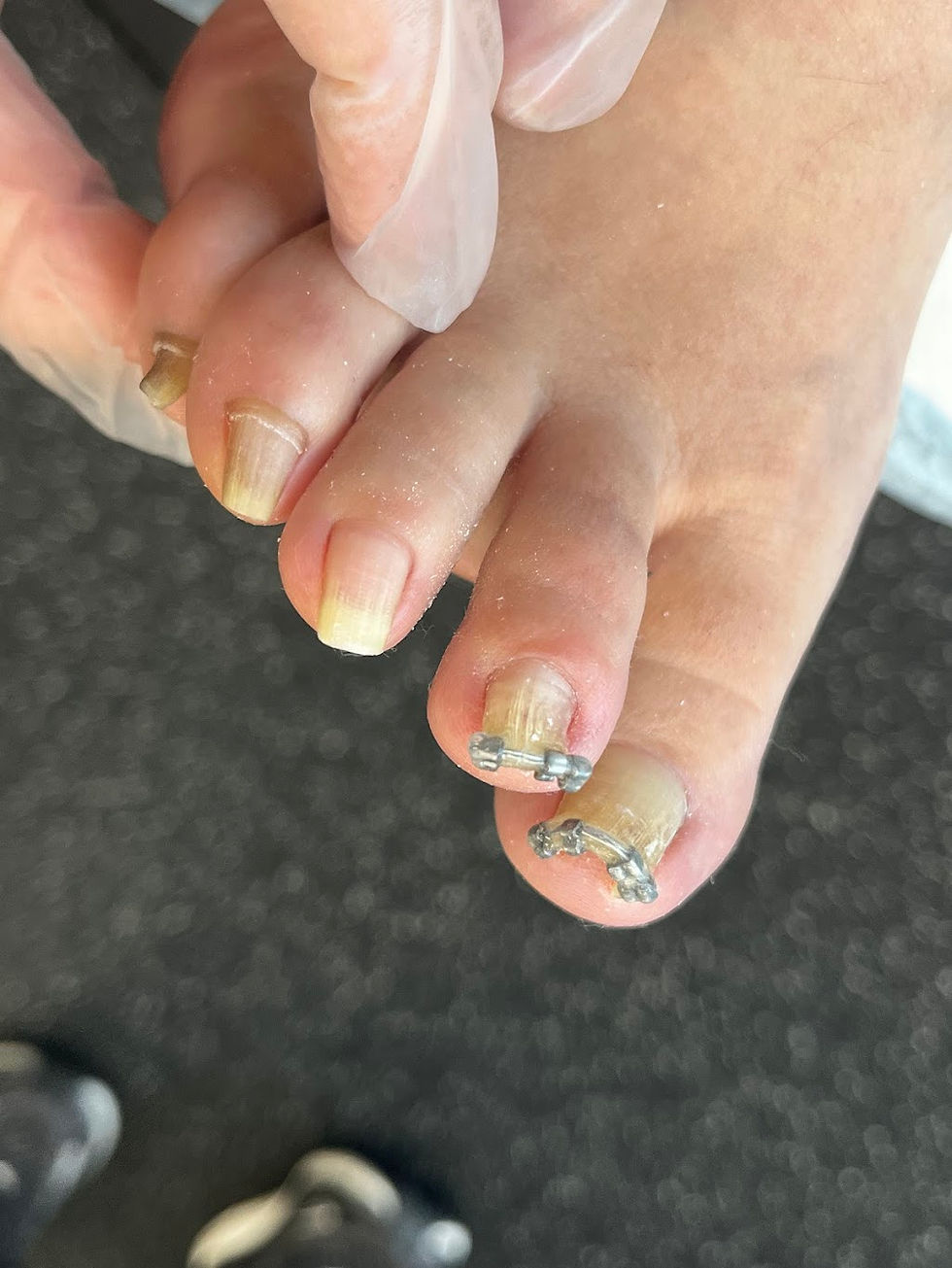
Understanding When Surgery May Be Appropriate
As Dr. Woo explains, the decision to surgically manage an ingrown or involuted nail depends on several important clinical factors:
“Basically, there’s three things I’m looking for. Number one — what’s the stage of the ingrown toenail? Is it in a severe state? In the severe state, you see chronic inflammation, growth of the border around the nail — called hypertrophy — or increased granulation tissue. Number two — is it constantly recurring? If it’s recurring ingrown toenail inflammation, it’s probably a good indication that we need to surgically take it out. And lastly — is it really affecting your activities of daily living because of the pain? In that case, we may need to take it out so you can get some relief quickly.”
These are important distinctions.
Cases involving:
chronic inflammation
significant granulation tissue
repeated recurrence
or severe pain affecting daily function
may require escalation or surgical intervention rather than conservative correction alone.
The Missing Middle Stage
However, many patients present before reaching that level of progression.
They may already experience:
increasing curvature
localized pressure
discomfort in shoes
mild inflammation
or early embedding
But without:
major tissue overgrowth
severe recurrence
or advanced inflammatory changes
Historically, many of these patients fall into a gap between cosmetic nail care and surgical management.
This is where conservative approaches — including structured nail bracing systems like NailLift — may help support earlier intervention and progression management.
Conservative Care Requires Clinical Judgment
Conservative care does not mean every nail should be braced.
Patient selection matters.
Timing matters.
Assessment matters.
Responsible conservative nail care includes recognizing:
when conservative management may be appropriate
and
when escalation is necessary.
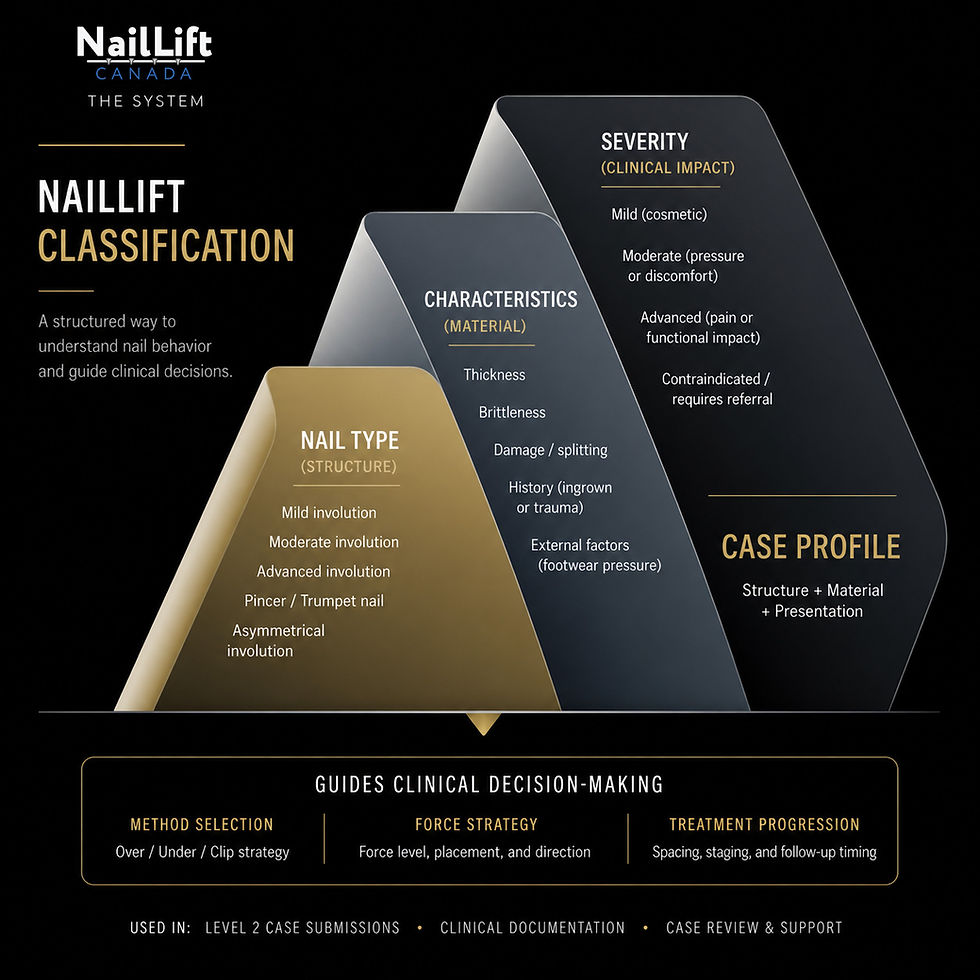
At NailLift Canada, our education pathways focus not only on application techniques, but also:
structural assessment
progression awareness
patient selection
and escalation judgment
Because the goal is not simply to apply a brace.
The goal is to understand where the patient currently exists along the progression spectrum — and determine the most appropriate intervention for that stage.


Comments